
There are few things my boys love more than turning an ordinary week into a full-blown theme.
Give them sharks, prehistoric creatures, mysterious ocean discoveries and the possibility of seeing something slightly terrifying from the safety of our couch, and they are in.
Honestly, same.
Shark Week 2026 begins Sunday, July 26 at 8 p.m. on Discovery and continues through Saturday, August 1. This year’s lineup includes 20 new specials featuring everything from prehistoric sharks and glowing sea creatures to shark intelligence, historic mysteries and some very dramatic hunting footage.
Not every Shark Week show is necessarily a great fit for younger kids, though. Some focus heavily on shark attacks, blood, feeding behavior or dangerous stunts. So I went through the full schedule and pulled out the episodes that appear to be the best options for families.
Before we get to the schedule, I have to admit that sharks feel especially relevant in our family.
Our Family’s Myrtle Beach Adventures
My husband grew up in Myrtle Beach, and we are lucky enough that Granny and Papa still live there.
That means our boys do not just think of Myrtle Beach as a vacation destination. It is part of their family story.
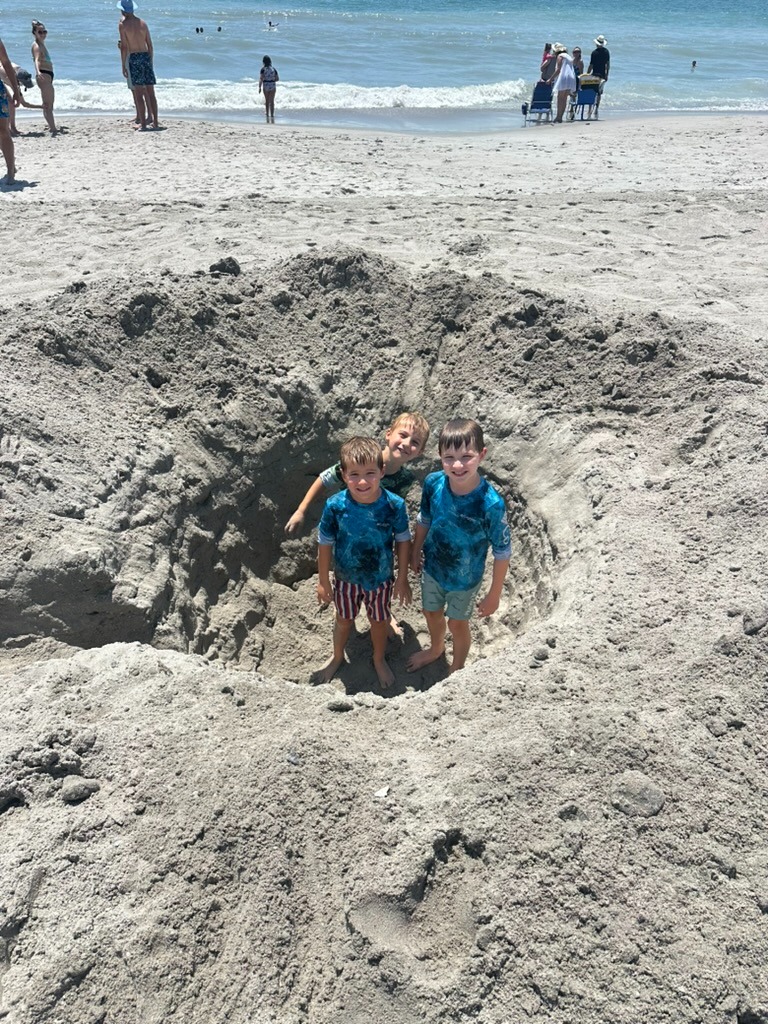
We love taking them back to spend time with their grandparents, run along the beach, dig holes that become much larger construction projects than anyone originally approved and search the sand for tiny treasures.
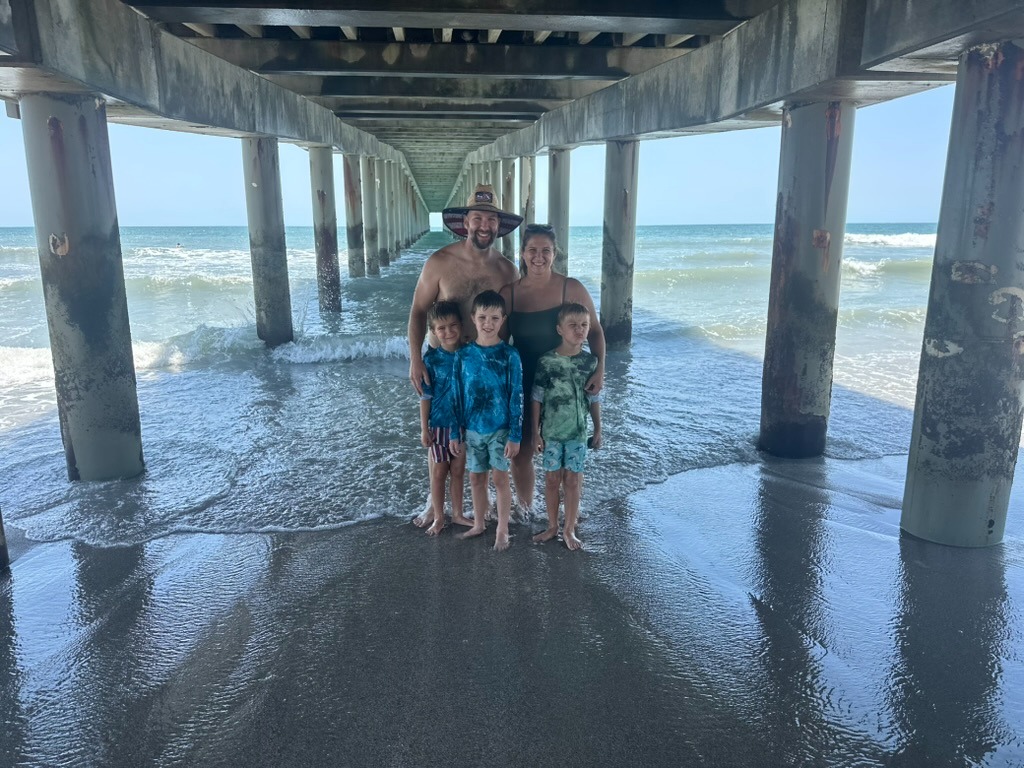
This year, we celebrated our oldest son’s birthday at The Breakers Resort in Myrtle Beach.
His birthday is in April, which is one of those months when South Carolina weather can make absolutely no promises. You might get a gorgeous beach day. You might get wind, clouds and three children asking why you booked a water vacation when the water is cold.
Thankfully, The Breakers has indoor water features and some seriously fun waterslides, so the boys could swim and play without their cute little lips turning blue.
We spent time at the resort, visited with Granny and Papa and, of course, made our way down to the beach.
The boys searched for shark teeth like they were participating in a highly competitive archaeological expedition. Every dark shell fragment required a full family review.
“Is this one?”
“What about this?”
“Mom, I think this is definitely a shark tooth.”
Most of them were not.
But we did find shark teeth, which made all the digging and squinting completely worth it.
We also found a live hermit crab moving through the shallow water. The boys gathered around it, fascinated by this tiny creature carrying its house on its back. We watched it for a while, talked about how it lived and then carefully left it exactly where we found it.
Those are some of my favorite family travel moments.
Not the heavily scheduled ones. Not the ones that require matching shirts, three reservations and a color-coded itinerary.
Just three boys standing barefoot at the edge of the ocean, completely captivated by something small and unexpected.
That is why I love Shark Week. It gives us another opportunity to build on that curiosity, learn more about the ocean and keep the adventure going after we come home.
Is Shark Week Appropriate for Kids?
Shark Week is not specifically designed as children’s programming.
Many of its specials are educational and science-based, but others include graphic hunting behavior, discussions of fatal or life-threatening shark encounters, bloody bait, aggressive attacks and dangerous human stunts.
Your children’s ages, interests and sensitivity levels will matter.
For my family, I would feel most comfortable starting with programs focused on prehistoric life, shark biology, exploration, animal intelligence and conservation. I would be more cautious with episodes centered on attacks, “kills,” feeding frenzies or people deliberately placing themselves in dangerous situations.
Watching together also gives you an opportunity to pause, answer questions and remind kids that television promos often emphasize danger because dramatic footage gets our attention.
The Best Kid-Friendly Shark Week Shows for 2026
These are the five episodes I would choose first for a family viewing list.
K-Pop Shark Heroes
Sunday, July 26 at 8 p.m. ET/PT
Actor and comedian Ken Jeong teams up with singer and longtime shark enthusiast REI AMI to explore sharks around the Korean Peninsula and help reshape negative perceptions of them.
This looks like one of the most approachable options for families because it blends pop culture, humor, exploration and a positive message about understanding sharks rather than simply fearing them.
A recent report about the special says REI AMI dives with species including reef sharks, hammerheads and bull sharks while sharing how the experience changed her own view of these animals.
Why families may like it: Familiar personalities, humor, global culture and an emphasis on changing misconceptions about sharks.
Parent note: The special was inspired in part by recent shark encounters near the Korean Peninsula, so parents should still expect some discussion of shark-related danger.
Jurassic Sharks
Tuesday, July 28 at 8 p.m. ET/PT
This special uses CGI to recreate some of the ocean’s strangest prehistoric sharks. The animated sequences are combined with real-world expeditions and information about living shark species connected to those ancient seas.
This may be the easiest pick of the entire week for dinosaur-loving kids.
It combines prehistoric history, visual effects and modern science in a format that should feel more like an ocean documentary than an attack-focused Shark Week special.
Why families may like it: Prehistoric creatures, CGI animation, fossil-era history and connections between ancient and modern sharks.
Parent note: Prehistoric predator scenes could still look intense for very young or sensitive viewers.
Expedition Unknown: Shark Secrets
Wednesday, July 29 at 9 p.m. ET/PT
Josh Gates explores the history behind famous and mysterious shark stories, including the earliest known shark attack, the sailors who faced a shark feeding frenzy after the sinking of the USS Indianapolis and the legendary Stronsay Beast that washed ashore in Scotland in 1808.
This episode is a good fit for older children who enjoy history, mysteries and Expedition Unknown.
It gives families plenty to talk about, including how historical stories are investigated and how scientists determine whether old accounts are accurate.
Why families may like it: Historical mysteries, exploration, shipwreck history and the possibility that an old “sea monster” was actually a shark.
Parent note: The USS Indianapolis story involves wartime deaths, injured sailors and shark attacks. This may be better for older elementary children, tweens or teens than young viewers.
Alien Sharks: Untamed America
Wednesday, July 29 at 10 p.m. ET/PT
Wildlife biologist Forrest Galante searches across the United States for unusual sharks and rays, including glowing swell sharks, elusive sawfish and enormous basking sharks.
This episode appears to lean into biodiversity, unusual adaptations and the surprising wildlife found in American waters.
The glowing sharks alone will probably be enough to get my boys’ attention.
Why families may like it: Bioluminescent animals, unusual species, wildlife exploration and fascinating science.
Parent note: Discovery describes the animals as some of America’s most bizarre and dangerous sharks, so there may still be intense encounters or dramatic editing.
Thresher Shark: Stun to Kill
Saturday, August 1 at 9 p.m. ET/PT
Scientists investigate how thresher sharks use their remarkably long tails to stun prey.
The title sounds dramatic—and it is—but the central concept is fascinating biology and physics. Researchers are attempting to document exactly how the tail strike works in a newly discovered shallow-water feeding area.
This could be a great option for kids who enjoy animal adaptations, biomechanics and seeing how scientists study wildlife.
Why families may like it: Fascinating anatomy, physics, hunting adaptations and real scientific observation.
Parent note: The episode specifically focuses on sharks stunning and killing prey. Expect hunting footage that could be upsetting to sensitive viewers.
Other Episodes Families May Consider
These episodes may also work for older children, tweens or families that regularly watch wildlife documentaries together.
Air Jaws: Red, White and Breach
Sunday, July 26 at 9 p.m. ET/PT
Researchers investigate great white sharks breaching along the California coast.
Breaching sharks are visually incredible, and the episode includes marine biology and filmmaking. However, Air Jaws programs traditionally include hunting behavior and dramatic predator footage.
Invasion of the Mega Sharks
Sunday, July 26 at 10 p.m. ET/PT
Scientists search near Nova Scotia for a record-breaking great white known as “Big Rose.”
Kids fascinated by enormous animals, tracking technology and tagging research may enjoy it, but Discovery describes the mission as high-risk.
Biggest Mako on Earth
Monday, July 27 at 10 p.m. ET/PT
A research team investigates reports of unusually large mako sharks near Southern California.
The science, search and tagging elements may appeal to older kids, though the program emphasizes enormous apex predators and whether they are hunting near the coast.
How to Train a Great White
Thursday, July 30 at 9 p.m. ET/PT
Researchers test whether great white sharks can learn, solve problems and respond to cues using methods influenced by techniques the U.S. Navy used with dolphins.
This may be one of the most educational specials of the week because it focuses on animal intelligence and cognition.
I would consider this a strong family option for older kids, but Discovery’s description also notes that the researchers enter shark-filled waters in New Zealand.
My Strange Shark Addiction
Friday, July 31 at 10 p.m. ET/PT
This special profiles four adults whose fascination with sharks plays an unusually large role in their homes, relationships, routines and finances.
It does not appear to focus on attacks or graphic hunting footage, but the subject matter may be more entertaining to adults than educational for children.
Shark Week Episodes I Would Preview Before Watching With Kids
The following specials may contain valuable science, but their official descriptions place more emphasis on attacks, aggressive behavior, injured animals, blood, dangerous experiments or high-risk stunts.
Bull Shark Dinner Bell
Monday, July 27 at 8 p.m. ET/PT
Researchers investigate what may trigger bull sharks to confront humans. The experiments examine human behavior, weather and prey preferences.
Because the premise centers on human-shark encounters and what might make people appear attractive to sharks, I would preview this before showing it to young children.
House of Sharks
Monday, July 27 at 9 p.m. ET/PT
Scientists study competing groups of great white sharks around a seal feeding ground in New Zealand.
Discovery’s description mentions a shark “battleground,” blood-based bait and rival shark groups competing for territory. It may be educational, but it also sounds intense.
Jaws vs. Orca
Tuesday, July 28 at 9 p.m. ET/PT
This special investigates conflicts between orcas and great white sharks, including sharks found with their livers removed and orcas damaging boats.
The predator behavior is fascinating, but the descriptions suggest potentially graphic animal remains and frightening encounters.
Chum Island: Catching a Killer
Tuesday, July 28 at 10 p.m. ET/PT
A researcher investigates a surge of aggressive shark attacks near an Australian community and creates an artificial chum island to attract possible suspects.
Between the attack stories, aggressive sharks and heavy use of chum, this would not be my first choice for younger viewers.
Expedition X: Atomic Sharks
Wednesday, July 29 at 8 p.m. ET/PT
Phil Torres and Heather Amaro investigate reports of erratic and aggressive shark behavior near the Marshall Islands, where the United States conducted 67 nuclear tests between 1946 and 1958.
Older kids may find the environmental history interesting, but the episode’s “mutant shark” framing and dangerous diving scenes could feel frightening or sensationalized.
What Shark Attacked?
Thursday, July 30 at 8 p.m. ET/PT
Experts use bite patterns, videos, eyewitness accounts and geographic data to identify shark species connected to serious attacks.
This is essentially a forensic investigation of life-threatening encounters. Interesting for older viewers, but likely too graphic or frightening for many children.
Ultimate Shark Dive
Thursday, July 30 at 10 p.m. ET/PT
High diver Molly Carlson attempts to jump from a helicopter into a narrow cage surrounded by sharks.
The episode centers on a dangerous, record-setting stunt and the possibility that she could miss the cage and enter chum-filled water. I would personally skip this one with younger boys who may be more interested in recreating the helicopter jump than absorbing the safety message.
Secrets of the Great White Kill
Friday, July 31 at 8 p.m. ET/PT
This special examines how great white sharks adapt their hunting strategies.
There may be excellent biology here, but the entire program focuses on predation and killing techniques. Expect potentially graphic hunting footage.
Sharkzilla Takes New York
Friday, July 31 at 9 p.m. ET/PT
Researchers investigate mauled marine animals, a former nuclear dumping ground and large mako sharks near New York.
The episode’s injured-animal imagery and radioactive-predator framing may be too disturbing for young children.
Great White Highway
Saturday, August 1 at 8 p.m. ET/PT
Scientists track great white sharks moving farther along the East Coast as beach communities experience more sightings, closures and close encounters.
The research and tagging may be informative, but the description emphasizes the possibility of future attacks and frightened coastal communities.
Complete Shark Week 2026 Schedule on Discovery
All listed times are ET/PT.
Sunday, July 26
8 p.m. — K-Pop Shark Heroes
Ken Jeong and REI AMI explore sharks around East Asia and work to challenge common fears and misconceptions.
9 p.m. — Air Jaws: Red, White and Breach
Researchers document great white sharks breaching along the California coastline.
10 p.m. — Invasion of the Mega Sharks
A team searches near Nova Scotia for an enormous great white known as Big Rose.
Monday, July 27
8 p.m. — Bull Shark Dinner Bell
Scientists examine factors that may trigger bull sharks to approach or confront humans.
9 p.m. — House of Sharks
Researchers study competing groups of great whites around a New Zealand seal feeding ground.
10 p.m. — Biggest Mako on Earth
A team investigates reports of mako sharks measuring approximately 15 to 20 feet near Southern California.
Tuesday, July 28
8 p.m. — Jurassic Sharks
CGI and real-world expeditions bring unusual prehistoric sharks back to life.
9 p.m. — Jaws vs. Orca
Researchers investigate how orcas may hunt great whites and challenge their position as top ocean predators.
10 p.m. — Chum Island: Catching a Killer
A marine biologist investigates a cluster of aggressive shark attacks off southern Australia.
Wednesday, July 29
8 p.m. — Expedition X: Atomic Sharks
The Expedition X team investigates unusual shark behavior near former nuclear testing sites in the Marshall Islands.
9 p.m. — Expedition Unknown: Shark Secrets
Josh Gates explores historical shark encounters and mysterious creatures once believed to be sea monsters.
10 p.m. — Alien Sharks: Untamed America
Forrest Galante searches American waters for unusual species, including glowing sharks and sawfish.
Thursday, July 30
8 p.m. — What Shark Attacked?
Experts use forensic evidence to identify sharks involved in serious encounters.
9 p.m. — How to Train a Great White
Researchers test the intelligence and learning abilities of great white sharks.
10 p.m. — Ultimate Shark Dive
High diver Molly Carlson attempts a record-breaking helicopter jump above shark-filled water.
Friday, July 31
8 p.m. — Secrets of the Great White Kill
Scientists examine the adaptable hunting strategies of great white sharks.
9 p.m. — Sharkzilla Takes New York
A researcher investigates mauled marine animals and large sharks near a former nuclear dumping site.
10 p.m. — My Strange Shark Addiction
Four devoted shark fans reveal how their fascination affects their homes, routines and relationships.
Saturday, August 1
8 p.m. — Great White Highway
Scientists track great white sharks moving farther along the East Coast.
9 p.m. — Thresher Shark: Stun to Kill
Researchers study the biology and physics behind the thresher shark’s powerful tail strike.
Turn Shark Week Into an Adventure at Home
A family adventure does not always require plane tickets, matching luggage or a perfectly planned itinerary.
Sometimes it looks like staying up a little later, making popcorn, learning about glowing sharks and listening to your children explain prehistoric ocean life with the confidence of marine biologists who have conducted approximately zero peer-reviewed studies.
You can make Shark Week even more fun by:
- Searching for shark teeth on your next beach trip
- Looking up which shark species live near your favorite coastline
- Visiting a local aquarium
- Creating a shark-themed snack board
- Reading shark books from the library
- Drawing and labeling different shark species
- Comparing the sizes of whale sharks, great whites, makos and threshers
Download My Free Shark Week Activity Sheets
I created a free set of Shark Week Activity Sheets to give kids something fun and screen-free to do before, during or after the shows.
The printable set includes:
- A shark-themed word search
- A word-search answer key
- A shark-themed crossword puzzle
- A crossword answer key
They are perfect for a quiet afternoon, a homeschool activity, a beach-trip surprise or something to keep little hands occupied while the family watches Shark Week.
Whether we are hunting for shark teeth in Myrtle Beach, meeting tiny hermit crabs at the water’s edge or learning about prehistoric sharks from the couch, I love finding ways to help our boys stay curious.
Because sometimes the best adventures happen far away.
And sometimes they begin right at home.